Showing posts with label antioxidants. Show all posts

Thursday, February 18, 2010

Bored at Home


Pleasures of Tea: Recipes & RitualsYou know those days that you stay at home most of them day for some reason? Well, I personally hate those days. I try as much as I can not to stay at home because when I’m at home with not much to do, I go and open the fridge every 5 minutes. I sometimes don’t even take anything out of the fridge, but I still open it and see what’s in it. Most of the times, though, I unconsciously grab myself a snack. Then, all of the sudden I realized that I’ve been snacking all day without really being hungry – just bored. This is definitely not good when you’re trying to lose weight. I know some people read, other people knit as a way to keep your mind of food. For me, none of those options work. I love being in the kitchen. So instead of reading or knitting, I make tea. After all, tea is calorie-free and all that hot water keeps me from feeling hungry too. Plus, tea takes a while to drink since it is a hot drink. You sort of have to wait a bit for it cool down or drink it really slowly. So, tea keeps me away from snacking. Well, I guess you could call tea a snack but at least it has no calories.

To make it more interesting, I make the tea from scratch instead of using store-bought tea bags. I particularly like chai tea. Since chai tea has so many spices, making it also keeps me entertained for a while. Here’s the recipe I use:

10 whole coriander seeds
10 cardamom pods
3 whole cloves
1 cinnamon stick
1 teaspoon of black tea (or 2 bags)
2 cups of skim or 1% milk
  1. Take the cardamom seeds out of the pod.
  2. Using a mortar, lightly crush the coriander and cardamom seeds. If you don’t have a mortar, you can crush them using the bottom of a glass.
  3. Wrap the crushed seeds, cloves and the black tea in a piece of cheesecloth. If you don’t have cheesecloth at home, you can use a coffee filter. Also, if you’re using black tea bags, you don’t need to put the inside the cheesecloth or coffee filter – just wrap the crushed seeds and the cloves. Set this homemade tea bag aside.
  4. Bring milk close to a boil.
  5. To the milk, add the cinnamon stick and the homemade tea bag (plus the black tea bags, if applicable).
  6. Remove from heat and let it stand for 5 minutes.
  7. You can add some Splenda if you like.
You can also make this chai tea with water instead of milk. I like to use milk because that way I get some calcium in for the day. I use skim milk, though, to keep it low-calorie. But, this recipe turns out just as good if you were to use water instead of milk. The important thing here is the spices. You’ll be surprised at how good they smell when you’re crushing them. Plus, they have some antioxidants

Sunday, February 14, 2010

Happy Valentine's Day!


My Hearts Desire Chocolate and Candy Gourmet Food Gift TowerThere is just so much chocolate around right now that it’s getting hard to resist. But, you know what? Chocolate is not at all that bad if you know which one to pick. Dark chocolate actually has these antioxidants known as tannins that are good for your health. As a matter of fact, tannins are the same antioxidant that you would find in green tea. However, notice that for dark chocolate to be beneficial, it has to be at least 60% cacao. Usually, when the cacao percentage is that high, it is quite bitter but it is still chocolate, right?

On the other hand, white chocolate is probably the worst type of chocolate you can have. Not only does it have close to no antioxidants but it is very high in calories and fat. In chocolate you have 3 main chocolaty ingredients: cocoa powder, cocoa butter and chocolate liquor. In white chocolate there is no cocoa powder but a lot of cocoa butter. Unfortunately, most antioxidants are found in cocoa powder due to its dark rich brown colour. So, the darker the chocolate is, the better it is for you. Thus, you can imagine why white chocolate is the worst of them all. 

The second worst is milk chocolate. In most cases, there is close to none real cocoa ingredients in milk chocolate and it has lots of sugar and milk solids. In fact, I’ve always found milk chocolate a bit suspicious. When you read the label on the package, it sometimes says something like chocolate product instead of milk chocolate. I don’t know what all that is about. Anyway, go for dark chocolate this Valentine’s day and enjoy! Don't forget to watch those calories, though. 

Thursday, January 21, 2010

Is it Really True?

Lately, I’ve been hearing a lot about acai berry supplements. I, personally, have not tried them. In fact, before last week, I didn’t even know acai berries existed. However, since I started this blog, I’ve been noticing a lot of advertisement on the web for this type of supplement. So far, I’ve read that apparently it stops cancer, improves digestion and, most importantly, helps people lose weight. It all sounds very interesting and somewhat too good to be true. Thus, I did a bit of research on these super berries.

Acai berries are just like any other type of berry (blueberries, strawberries, etc.). They even look like large shiny blueberries if you ever get the chance to see fresh acai berries. Then, what makes them so good for you? Well, just like any other berry, they are loaded with polyphenols which are a category of antioxidants. These polyphenols have been said to provide our bodies with various health benefits. For example, a diet high in antioxidants such as polyphenols is usually associated with low rates of several types of cancer. Thus, acai berries have been marketed as “superfoods” because of their polyphenol/antioxidant content. In fact, the type of polyphenol found in berries is what gives them their colour. I’ve posted some information on antioxidants, fruits and vegetables in the past. Click here to see that post.

Ok, so we know that acai berries contain antioxidants, but so do blueberries. Why then are acai berries so popular right now? I mean, I haven’t seen any ads for blueberry or blackberry supplements lately. To get the truth about acai berries, I had to do some serious digging. Fortunately, I came across an article published in the Journal of Agricultural and Food Chemistry back in 2008. This article determined the antioxidant capacity of several products: pomegranate juice, red wine, grape juice, blueberry juice, black cherry juice, acai juice, cranberry juice, orange juice, apple juice, iced green tea, iced black tea and iced white tea. For this study, they used commercial brands in an attempt to make the study as realistic and helpful to consumers as possible. The antioxidant capacity of each of these products was then determined by using a series of tests. To make the results understandable, they gave each product a “grade” based on their individual antioxidant capacity. They called this “grade” the antioxidant potency composite index. This index is out of a hundred and is the average of 3 different brands of each product tested. Here’s the report card:


The index for pomegranate juice is quite shocking, don’t you think? Going back to acai berries, though. They are, indeed, rich in antioxidants. Nonetheless, keep in mind that it was acai juice that was used for this study. Unfortunately, I couldn’t find a similar article on acai berry supplements rather than juice. When I looked for articles or studies done on acai berry supplements, I only came across multiple scam warnings including one published in the “Question of the Month” section of the Journal of the American Dietetic Association (Sept, 2009). This brief article is the answer to the question: What is the Acai Berry and are there health benefits? Basically, they do not say that the claims made about the acai berry are true neither does it say that they aren’t. It just says that there is still not enough conclusive information to determine whether or not acai berries are as beneficial as they say. They do, however, put a lot of emphasis on scams concerning acai berry supplements, so do be careful if you want to give these supplements a try. Just remember, if it sounds too good to be true, well, it probably is.

By the way, speaking of "innovative" products, I put up a poll so see what other new items you'd also like to try. You'll find this poll at the top left hand corner of the page.

Saturday, January 9, 2010

Best Fruits and Vegetables

I don’t know about you, but I like to do my grocery shopping on Saturdays – today. As we all know, fruits and vegetables are essential if you’re trying to lose weight or simply trying to eat healthy. Since I’m going grocery shopping today, I figured that maybe I should get a better idea as of to what kinds of fruits and vegetables I should be buying. I mean, all fruits and vegetables are extremely healthy by definition but there must be some that are better than others, right?

As I was gathering information on the subject, I came across the word antioxidants. These are the compounds that give fruits and vegetables their colour. Also, these compounds are the ones that provide us with most of the health benefits associated with a high intake of fruits and vegetables. Thus, experts in the field suggest that we should eat fruits and vegetables that are rich in colour. But, wait a minute. Are certain colours better than others? To answer this question, take a look at the list below. This is a list of some of the most common antioxidants found in fruits and vegetables:

Glucosinolates and chlorophyll: They can be found in brussels sprouts, collards, kale, watercress, turnip, cabbage, broccoli, rapini, mustard greens and cauliflower. All these foods are considered super foods because of their high content in either or both of these antioxidants.

Anthocyanins: This antioxidant is responsible for the red and blue colour in berries, eggplant and red cabbage. They too are considered extreme good for your health. I guess we all have heard how good berries are for you. Their high content in anthocyanins is the reason why they are so good for you.

Carotenoids: These give their yellow, orange or red colour to fruits and vegetables. A good example of a food containing large amounts of carotenoids is carrots, of course. Tomatoes are also a good example.
Carotenoids are very beneficial to our health. If you don’t like carrots or tomatoes,however, there’s still hope. There is this sub-category of carotenoids called lutein. Lutein is a very potent antioxidant that can be found in dark green fruits and vegetables such as raw kale, cooked spinach, collards, turnip greens, green peas, broccoli and romaine lettuce.

Allicin: I believe this antioxidant exists in nature to be the exception to the rule as it is found in foods that lack colour such as garlic and onions.

As you can see, dark green vegetables such as broccoli usually have more than one kind of antioxidant. This is why they are often called super foods – they are super good for you.

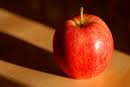
Another recommendation concerning fruits and vegetables is to eat the skin. I know not everyone is thrilled to eat the skin, especially when it comes to apples and peaches, but most of the fibre is found in the skin. This is the reason why the skin is usually a bit rougher that the “meat” inside. Also, most of the vitamins and minerals are found just under the skin. Thus, if you take the skin off, you will lose a somewhat significant amount of vitamins and minerals.

Finally, I wanted to post this list of the fruits and vegetables that have the highest amounts of antioxidants. Just a little something to make your fruit and vegetable shopping a bit easier.

Fruits                                                                                Vegetables
1. Berries (Blueberries, cranberries, etc.)                   1. Red beans
2. Apples (red delicious)                                            2. Artichoke hearts
3. Cherries                                                                3. Russet potatoe
4. Plums                                                                    4. Red cabbage
5. Avocados                                                               5. Asparagus

Source: J. Agric. Food Chem. (2004), 52, 4026-4037

P.S. I got some of this information from the book "Foods that Fight Cancer" since antioxidants are widely believe to, well, fight cancer. If you have access to the book, check it out for more detailed information.

Search This Blog